
Category: movies
You are viewing all posts from this category, beginning with the most recent.
Greenland (2020) | Film Review
" “>
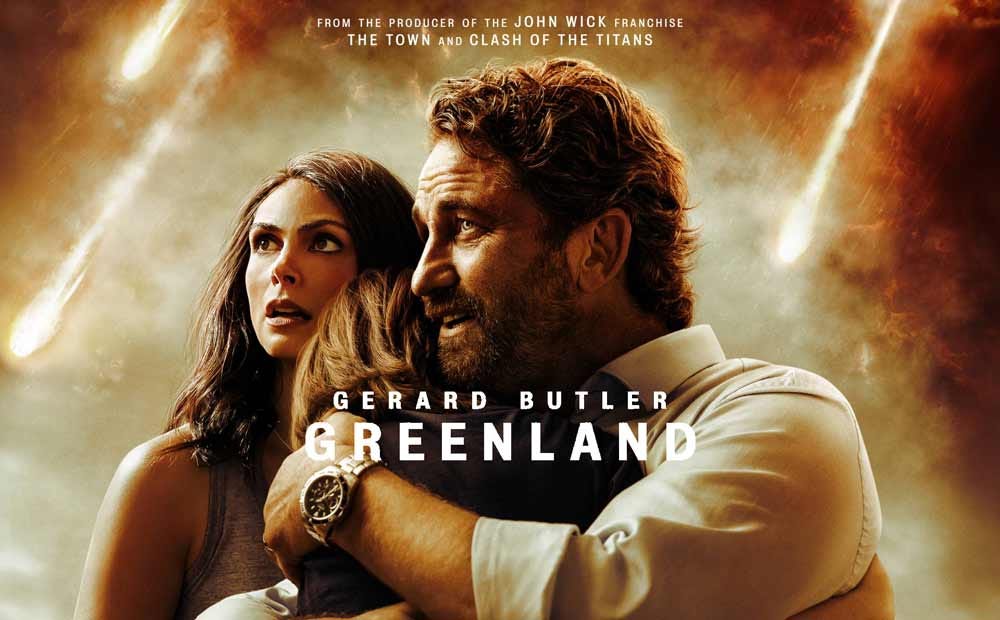
Good GOD, what a pig. Sure, Gerard Butler was a staple in mid-budget action flicks, but this dumpster fire isn’t one of his better ones, and it’s not going to inject any enthusiasm into prospects for his ongoing career.
BUDGET: $35 million BOX OFFICE: $47.5 million (worldwide)
Directed by Ric Roman Waugh and written by Chris Sparling, this schlocky disaster flick wannabe already instills a sense of dread before you cue it up after seeing that the movie poster proudly proclaims the movie is from “the” producer of the John Wick franchise, The Town, and Clash of The Titans (that monster hit… get it.)
When was the last time you were excited to see the latest film from your favorite producer?
Look, I’ve tried to write a simple summary of the plot, but it doesn’t make any sense. Gerard Butler’s insipid delivery as structural engineer John Garrity fares as well as expected when joined by the phoned in crap from Morena Baccarin (wife Allison) and Scott Glenn (Allison’s father Dale) and the obligatory kid, played by Roger Dale Floyd. There’s nobody else of note in the film. I’m rather surprised that these three agreed to sign on, but such is the lack of quality in Hollywood these days.
The basic rundown is as follows: John and Allison are in a bad way, but it’s not made clear why. We also learn that a comet is going to just barely miss Earth, then some of it’s going to hit, then all of it’s going to hit. That’s when John gets a call from the government that tells him he’s been selected to survive if he can get his family to a nearby military base before the end of the day. A lot of stupid shenanigans ensue, they get separated, and they get back together, and they survive. The end.
Big whoop.
Simply put, it’s a waste of time. The pacing is acceptable, but there are a lot of story elements that just feel slapped on, like generic tropes strung together to approximate an actual story. There’s zero recognizable character development, especially for Gerard Butler’s role. He’s not developed as a real, feeling, engaging, desperate human. His life circumstances bring no stakes. He’s not redeemed in the end. He doesn’t learn any harsh lessons. He’s just an unadorned avatar. The same applies to Baccarin and Glenn’s characters.
Multiple planes in the sky are clearly copy-pasted. The fires in the neighborhoods are way too big. The compositing is sloppy. Shots throughout are amateurish. All of it lacks any real energy, something I’m pretty sure is necessary for a disaster film. Hell, I’d bet real money that the Greenland shots are stock.
The Takeaway: Don’t bother.
How Pixar killed traditional animation
" “>
It's hard not to think of Pixar and, by extension Apple, as amazing American institutions built by the astonishing, guiding hand of the late Steve Jobs. Pixar, after all, has churned out a steady stream of box office smashes, with the occasional stumble. Yet, at the same time, Pixar has become a cancer that has infected the Western World's lauded history of traditional, hand-drawn animation like an invasive species. We are paying a very steep price for Pixar's success today, and for the foreseeable future.
There is no question that Steve Jobs was a visionary and reshaped our expectations of computers and technology. He and friend Wozniak almost single-handedly created the personal computer market in the mid-70's. However, by 1985 he was ousted from his own company because he didn't fit the standard corporate mold. Steve didn't rest, however. He created NeXT Computers and later, Pixar. Pixar had a megahit with Toy Story in 1995 and Jobs sold NeXT to Apple in 1997. In that same year, Steve Jobs returned to Apple as Interim CEO.
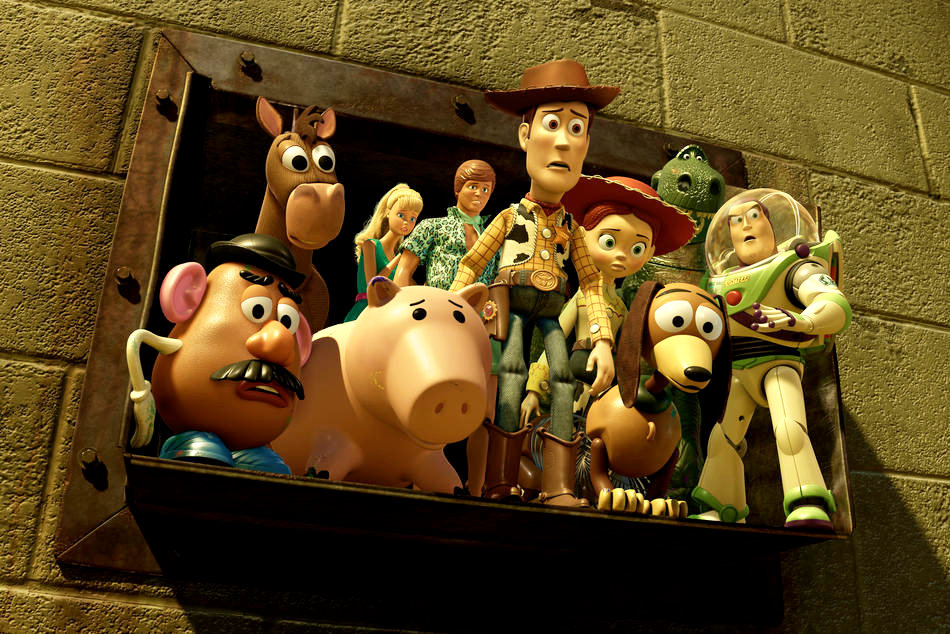
While Jobs was reshaping what we understand as personal technology, Pixar was hard at work creating a new kind of animation using 3D rendering technology it had invented. That, however, is where the two diverge. As Apple created an environment where other manufacturers would start to compete with Apple, Pixar was starting to carve out a niche that would eventually become the entire market, forcing all comers to migrate to 3D or fall behind.
It's hard to ignore a studio whose every release rakes in hundreds of millions worldwide, time after time, almost without fail. Even the films considered relative failures by critics made tons of money for Pixar and distributor, Disney. Spielberg, Katz, and Geffen's DreamWorks SKG was the first real studio practically formed to take Pixar head-on, and eventually it zeroed in on a number of critical hits, namely the popular Shrek franchise. Others would start to make their marks, as well, like Sony Animation, Blue Sky, and Universal. Even Disney started making 3D features in-house.
1995 saw the theatrical release of six traditionally animated films and Toy Story, the first feature length 3D animated film. Toy Story went head-to-head with Disney's Pocahontas and A Goofy Movie and Amblin's Balto. By 2012 Pixar pitted the Celtic-themed Brave against seven CG-based and three stop motion films.*
2011's Winnie The Pooh from Disney, was the last significant traditionally animated feature to be released in the US.

2015 saw the release of Nickelodeon's The SpongeBob Movie: Sponge Out of Water which featured traditional, CG, and live-action sequences, so can't be counted as a traditional film. Feel free to poke around the lists yourself, though it's quite depressing. In fact, Japan is the only major media producer that predominantly uses traditional animation, though it is commonly blended with cost-saving CG backgrounds and other non-character elements. Most Japanese feature-film releases are also traditionally animated, and Japan's most applauded animation director, Hayao Miyazaki, only rarely applies the use of CG animation, and never to anything important.

So, the result has been the almost complete dissolution of Western traditional animation studios. Period. It's not really a matter of the efficiency of output, after all, Japan produces a literal fuckton of animation over four seasons each and every year. It seems like it's come down to mere one-upmanship, and that sucks for animators or anyone who wants to go into animation.
Traditional animation is an art form. It is based purely in art as a creative, visual outlet that springs from human hands and is viewed by human eyes. While 3D animation can, and often is, beautiful, it is far less organic in variance, creative and/or cultural diversity, and frequently devoid of emotional impact. That last bit is critical. Sure, a story can be strong, and when edited together well, with good voice acting, and a compelling soundtrack, a CG film can be emotionally engaging. They simply lack the additional tonal quality of analog.
Like vinyl records.
* NOTE: All films noted or referenced were released primarily in the US market.
Damon's The Great Wall isn't so bad
" “>
You know, if more Americans watched Chinese movies, they might understand films like The Great Wall better. I'm more of a Japanophile myself, but I watch a good number of Chinese epics. Netflix is loaded with them, and some of them are quite good.
The thing you need to understand about Chinese culture is that the ideal of working for the benefit of the whole has been around for a lot longer than Mao Zedong's Cultural Revolution (communism, if you didn't learn about Mao in school). The other thing you need to understand is the Chinese love for tales of mythology. Chinese culture has been around for a very, very long time, so they've got a lot of them.
Now, before we get to the idea of whitewashing, I'll say up front, I disagree. Matt Damon plays a white dude who tries to get to China to trade for gunpowder. Despite being a highly skilled mercenary who is mad down with the bow and arrow skills, he loses all but one of his cohort, only to be taken into custody by the Chinese Army at the eponymous wall.
Without revealing any spoilers, I'll say that Damon's stonehearted mercenary is ultimately swayed by the amazing qualities of the Chinese people to connect and fight a shared enemy. He learns that there is much more to life than just fighting for food and money. I'm not suggesting that China has been this oasis from pain and fear and life as we now it all this time, nor that communism is a fix for our ails, but this is what drives a primary element of Chinese culture if you're going to watch these films.
On that note, if you want to see some subtly subversive Chinese film making, check out Chronicles of The Ghostly Tribe. On its surface, it looks like a love letter to the Cultural Revolution, but just check out the overtly hyper-positive attitudes and glassy-eyed recitation that makes it more clownish than oppressive. It's not a bad film, either.
The only thing I want to say now is that you should give this film a chance. It's an epic fantasy that might even be a little too short to tell the entire tale, but it works. You can even skip the beginning bit right up until they get to the Great Wall. That's where I would have started the film with a short, explanatory preamble.